
UK Online Slots Surge Past Stake Limits in Groundbreaking Commission Data Through Late 2025
Fresh Insights from the Gambling Commission's Operator Data
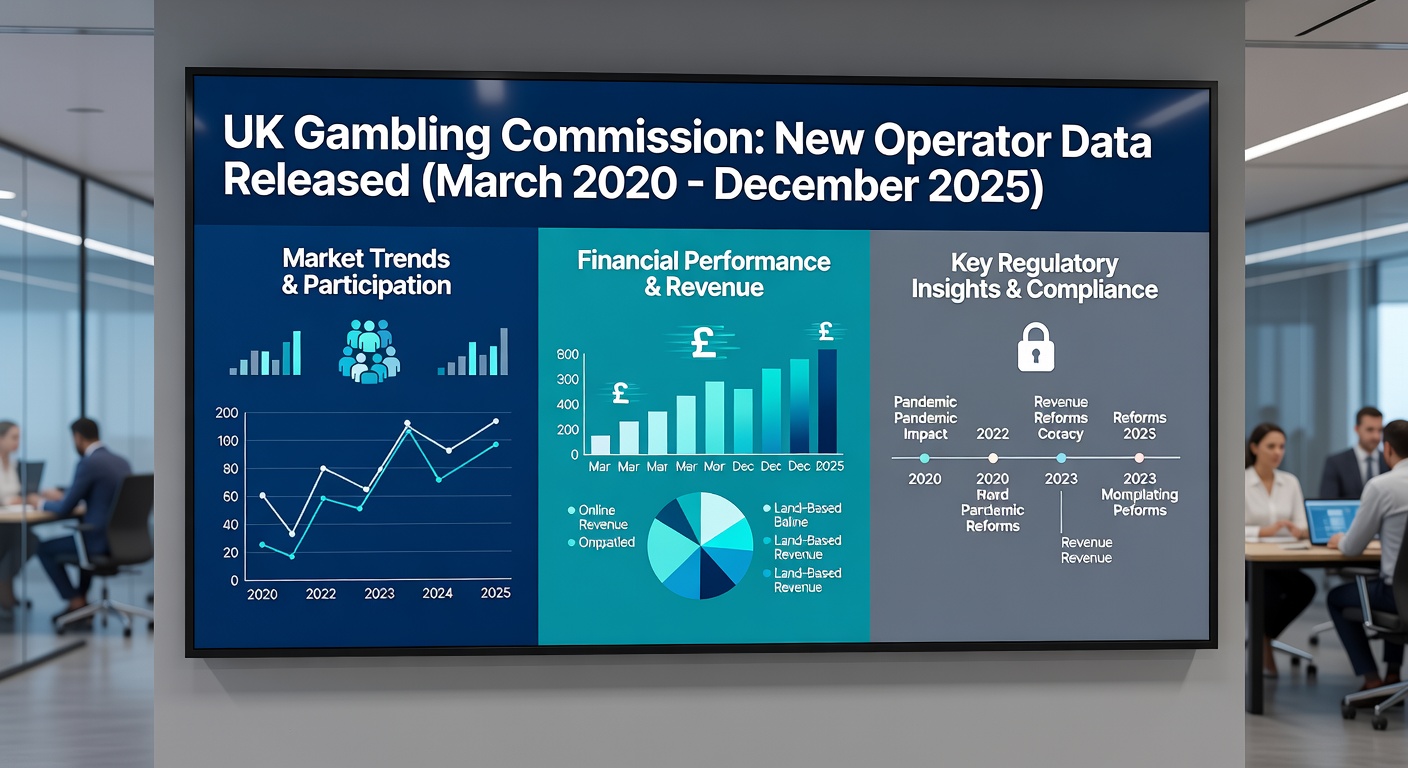
The UK Gambling Commission dropped its latest operator data in February 2026, covering online slots activity from March 2020 right through to December 2025, and what's striking is how the sector powered through new stake limits rolled out that same year; figures reveal a resilient market where gross gambling yield climbed even as regulators tightened the reins on maximum bets per spin.
Data pulled from licensed operators paints a clear picture of sustained engagement, with slots standing out amid broader gambling trends; researchers tracking these metrics note that despite the introduction of £5 per spin caps for adults over 25 starting April 9, 2025, and £2 limits for 18- to 24-year-olds from May 21, overall activity didn't just hold steady, it expanded in key areas like total spins and active player numbers.
Take Q3 of fiscal year 2025/26, for instance, where slots gross gambling yield, or GGY, jumped 10% year-on-year to reach £788 million; that's the net win for operators after payouts, and the uptick signals players adapted quickly to the new rules, perhaps shifting strategies or favoring higher-volume play on lower stakes.
Key Growth Metrics That Bucked the Odds
Spins tell an even bigger story, totaling 25.7 billion across the quarter, a 7% increase from the prior year, while average monthly active accounts rose 5% to 4.6 million; observers point out this growth happened precisely as stake limits kicked in, suggesting operators and players found ways to keep the momentum going, whether through promotional tweaks, game variety, or mobile accessibility that keeps sessions rolling without big bets.
And here's where it gets interesting: the data spans from the early pandemic months of 2020, when online gambling spiked as land-based venues shut down, all the way to late 2025, showing a long-term upward trajectory that stake limits couldn't derail; experts who've pored over these numbers highlight how total spins have compounded over time, with billions logged monthly even under scrutiny.
People familiar with the sector often notice patterns like this, where regulatory changes prompt behavioral shifts rather than outright declines; in this case, the commission's market overview report underscores that online slots accounted for a hefty slice of remote gambling activity, drawing in consistent participation from a growing pool of accounts.
Stake Limits in Action: Implementation and Immediate Effects
Those new caps didn't sneak up on anyone; the £5 limit for over-25s launched mid-spring 2025, followed weeks later by the £2 restriction for younger adults, yet Q3 data, which bridges the full rollout, shows no immediate plunge in core metrics; instead, GGY's 10% rise indicates operators captured more volume, with spins up despite each turn costing less on average.
Turns out, the market adjusted swiftly, as average bets per spin likely dropped to comply, but frequency compensated; researchers analyzing the commission's longitudinal data from 2020 onward observe that online slots have weathered economic ups and downs before, from lockdown booms to inflation pressures, and these limits seem just another hurdle cleared with higher spin counts.
What's notable here is the age-based differentiation, where younger players faced steeper cuts, potentially steering them toward free-play modes or lower-volatility games; case in point, one set of operator-submitted figures reveals how active accounts held firm at 4.6 million monthly, implying broad retention across demographics even as maximum exposure per spin shrank dramatically.
Shifts in Player Behavior: Sessions Shorten, Long Hauls Drop
But not everything trended up; long sessions exceeding one hour fell 16% to 8.9 million in the quarter, and average session length dipped to 16 minutes, signaling a choppier play style under the new rules; data indicates players broke up their time, perhaps hitting multiple short bursts rather than marathon grinds, which aligns with safeguards aimed at curbing prolonged exposure.
So while GGY and spins climbed, these session metrics softened the picture, showing regulatory intent taking hold in subtler ways; those who've studied gambling patterns over the five-year span note that pre-2025 averages hovered longer, but post-limit data suggests quicker logins and logouts, with 25.7 billion spins spread across more fragmented interactions.
It's noteworthy that this contrasts with total activity growth, creating a balanced view where engagement persists, yet intensity per sitting eases; experts observing the March 2020 to December 2025 arc point to mobile dominance as a factor, since apps lend themselves to bite-sized sessions that fit stake-limited play without losing appeal.
Broader Context Within Remote Gambling Trends
Slots didn't operate in a vacuum; the commission's full operator dataset to December 2025, published as March 2026 dawned, embeds these figures in wider remote gambling stats, where online products overall maintained vigor despite affordability checks and other reforms; yet slots specifically shone, with their GGY spike outpacing some peers and underscoring the category's pull.
Now, consider the baseline: back in early 2020, pandemic-driven shifts funneled players online en masse, setting a high bar that 2025's limits tested but didn't topple; figures reveal steady climbs in active accounts year after year, culminating in that 4.6 million mark, while spins ballooned to levels unseen pre-limits.
One researcher dissecting the report highlighted how GGY's £788 million for Q3 alone reflects operator resilience, as margins held amid compliance costs; and although long sessions dropped, the sheer volume of shorter ones kept the ecosystem humming, proving the market's adaptability when the stakes, quite literally, get lowered.
Implications for Operators and Regulators in 2026
Fast-forward to early 2026, and these stats, fresh off the press in February, give operators a roadmap for compliance while hinting at untapped potential in high-frequency, low-stake models; regulators, meanwhile, can claim wins on session controls, with that 16% plunge in extended play and trimmed averages to 16 minutes marking progress on harm reduction fronts.
People in the industry often say the rubber meets the road in data like this, where growth metrics clash with behavioral curbs to reveal a nuanced reality; the commission's tracking from 2020 through 2025 shows slots evolving, not shrinking, under pressure, and as March 2026 unfolds, eyes turn to Q4 data for confirmation of sustained trends.
There's this case from the report where spin volumes hit 25.7 billion despite dual-phase limits, illustrating how player numbers and habits recalibrated; it's not rocket science, but the numbers don't lie, painting a sector that's leaner in duration yet fatter in participation.
Wrapping Up the Data Dive
In the end, the UK Gambling Commission's operator data through December 2025 lays bare a slots landscape that's thriving amid constraints, with GGY at £788 million, spins at 25.7 billion, and accounts at 4.6 million for Q3 FY2025/26, even as sessions shortened and long hauls faded; stake limits from April and May 2025 reshaped play without halting momentum, offering a factual snapshot of adaptation in action.
Observers note this balance as key, where regulatory guardrails coexist with market expansion, and as 2026 progresses, these insights from March 2020 onward set the stage for what's next; the full story, grounded in operator-submitted precision, underscores resilience in a closely watched vertical.