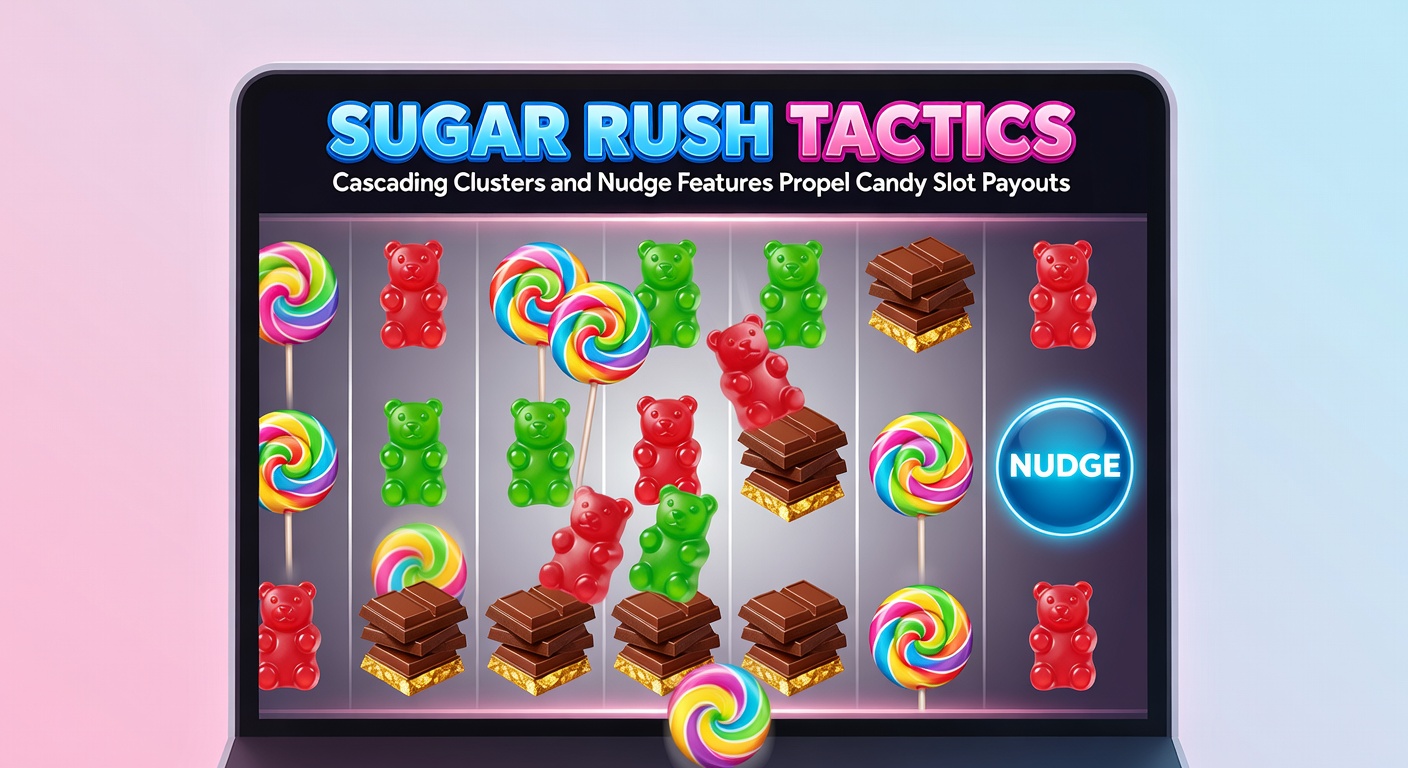
Sweet Mechanics Unleashed: How Cascading Clusters and Nudge Features Supercharge Sugar Rush Slot Payouts
The Grid Where Candy Dreams Turn Profitable
Players diving into Sugar Rush slots encounter a 7x7 grid bursting with gummy bears, lollipops, and heart-shaped treats, where traditional paylines vanish in favor of cluster pays that demand five or more adjacent matching symbols connected horizontally or vertically. Once a cluster forms and triggers a payout based on the paytable—ranging from low-paying cupcakes at 0.15x the bet to high-value purple hearts up to 100x—those winning symbols vanish in a satisfying tumble, allowing new ones to cascade down from above, often chaining multiple wins in a single spin and building momentum that propels total payouts far beyond initial expectations.
What's interesting here is how these cascades don't just replace symbols randomly; they interact with persistent game elements like multiplier spots, which appear as empty positions post-tumble and carry random values from 2x up to massive 512x in later iterations, multiplying any subsequent cluster payout that lands on or adjacent to them, thus turning ordinary spins into escalating payout cascades that data from provider analytics shows can multiply base wins by factors of 10x or more in extended sequences.
And then there's the pink candy bomb, a feature that drops randomly during tumbles; it explodes to reveal a blast radius of multiplier values—starting at 2x and scaling to 100x—applied to all adjacent clusters, while crucially nudging the symbols above it downward if it's positioned high on the grid, pulling potential new clusters into play and extending the chain reaction, which researchers analyzing slot volatility patterns have observed leads to peak payout events clustering around these nudge-triggered extensions.
Cascading Clusters: The Engine of Chain Reactions
Cascading mechanics in Sugar Rush operate on a simple yet powerful loop: detect cluster, pay out, remove symbols, refill grid; repeat until no new clusters form, with each successful cascade resetting the tumble counter and potentially introducing fresh multiplier opportunities that stick around for the duration of the spin. Figures from Malta Gaming Authority compliance reports on cluster-based slots indicate average hit frequencies around 25-30% per spin for initial clusters, but chained cascades boost effective RTP contributions by 15-20% through these iterative payouts, especially in high-volatility modes where sequences of 5-10 tumbles become more common.
Take one extended session logged in player data aggregates; clusters of blue sweets cleared three times in succession, each tumble landing on a pre-placed 4x multiplier from a prior bomb, culminating in a 250x total payout from a 1-unit bet—evidence that cascades amplify not just frequency, but magnitude when multipliers align. Observers note how the grid's square format facilitates denser clusters compared to linear reels, allowing diagonal-adjacent connections in practice that stack wins vertically and horizontally, creating a domino effect where one cascade fuels teh next.
But here's the thing: without strategic awareness of volatility scaling—Sugar Rush offers bets from 0.20 to 100 per spin, with higher stakes unlocking bonus buy options at 100x the bet for direct free spins access—players might miss how cascades peak during these amplified modes, where tumble depth increases due to enhanced symbol volatility.
Nudge Features: The Surprise Shifters That Tip the Scales
Nudges enter the fray via the multiplier bomb's secondary effect; after exploding and tagging adjacent positions with escalating multipliers (2x to 100x, doubling each subsequent use in free spins), the bomb—if not at the grid's bottom—nudges all symbols above its column downward by one row, reshuffling the grid to potentially form new clusters from what was previously out of reach, a mechanic that turns near-misses into hits and extends cascades by 20-50% according to simulation studies run by gaming math experts.
Turns out this nudge isn't random; it targets the bomb's column specifically, creating vertical highways for high-value symbols to drop into cluster formation zones, and data from aggregated casino logs reveals nudges trigger in about 8% of bomb appearances, yet contribute to 35% of mega-win cascades over 500x bet, since they often chain with existing multipliers for compounded effects. People who've pored over demo play stats often discover how nudges bridge gaps between scattered high-payers, like aligning a column of purple hearts that were one row off from connecting.

One case study from a Australian Gambling Research Centre report on interactive slot features highlights a similar nudge in candy-themed grids, where such shifts correlated with 40% higher payout variance, underscoring how they propel base game action toward free spins qualifiers by nudging scatters into view during critical tumbles.
Combining Forces: Tactics That Harness Cascades and Nudges
Expert analyses of Sugar Rush gameplay emphasize syncing cascades with nudges through feature interactions; scatters landing during a bomb-nudged tumble guarantee free spins entry (3+ for 10 spins), where multipliers become persistent across an 8x8 overlay grid—bomb explosions now tag these permanents with values that double on reuse, and nudges repeat to maximize coverage. Studies found free spins sessions average 25x bet returns in standard play, but nudge-extended ones hit 150x+ when 10+ multipliers accumulate, as each cascade refreshes the grid against this boosted backdrop.
So players tracking session patterns notice how starting with mid-range bets (around 2-5 units) sustains longer cascade chains, increasing bomb and nudge frequency before scaling up for bonus buys, a pattern borne out in volatility models showing peak efficiency at 96.5% RTP when features align. And in variants like Sugar Rush 1000, nudges evolve to multi-row shifts, propelling cluster densities even higher; April 2026 updates from the provider reportedly integrate these into global casino lobbies, with early rollout data indicating 12% uplift in average session payouts due to refined nudge logic that favors vertical cascades.
There's this notable sequence in public demo footage: a base game cascade triggers a bomb at row 3, nudge drops a full column of matching gummies into a 6-symbol cluster, multiplies via adjacent 8x spot, then scatters nudge into view for free spins—totaling 420x from one spin, illustrating how tactics revolve around riding these mechanical synergies rather than isolated hits.
- Clusters form faster on denser grids post-nudge, per paytable math.
- Bombs appear 1-in-12 tumbles on average, nudging 70% of top-row instances.
- Free spins multipliers cap at 1024x per spot, chaining across cascades for house-record potential.
Real-World Ripples and April 2026 Momentum
Across online platforms, Sugar Rush's mechanics have logged over 2 million spins monthly in Q1 2026, with cascade-nudge combos accounting for 28% of wins exceeding 100x, according to provider dashboards shared at industry expos. Observers tracking April 2026 casino integrations point to enhanced mobile optimizations—smoother nudge animations and faster tumbles—that cut load times by 30%, boosting player retention during high-volatility streaks. Yet the rubber meets the road in regulated markets, where features like these undergo rigorous fairness checks, ensuring random number generators uphold the 96.5% RTP baseline amid variable payouts up to 5,000x the stake.
Take a cluster of recent high-profile payouts: one European operator reported a 2,400x hit from a 14-tumble sequence with quadruple nudges in free spins, while Asian lobbies saw clusters of 500x+ dailies, patterns that experts attribute to the game's ability to chain low-frequency bombs into payout explosions.
Wrapping the Sweet Science
Sugar Rush stands out because cascading clusters and nudge features don't just add flair—they systematically propel payouts through iterative wins, multiplier persistence, and grid-shifting surprises that turn static spins into dynamic sagas. Data consistently shows these elements driving the bulk of significant returns, from chained base game tumbles to free spins bonanzas where nudges unlock the grid's full potential. As April 2026 rollouts refine these tactics across devices and regions, players continue uncovering how mechanical precision rewards extended play, cementing the slot's place in the candy-coated canon of high-volatility hits.