
Provider Showdowns: Tracing How Mobile Designs Link Free Spins to RTP Peaks Across Studio Catalogs
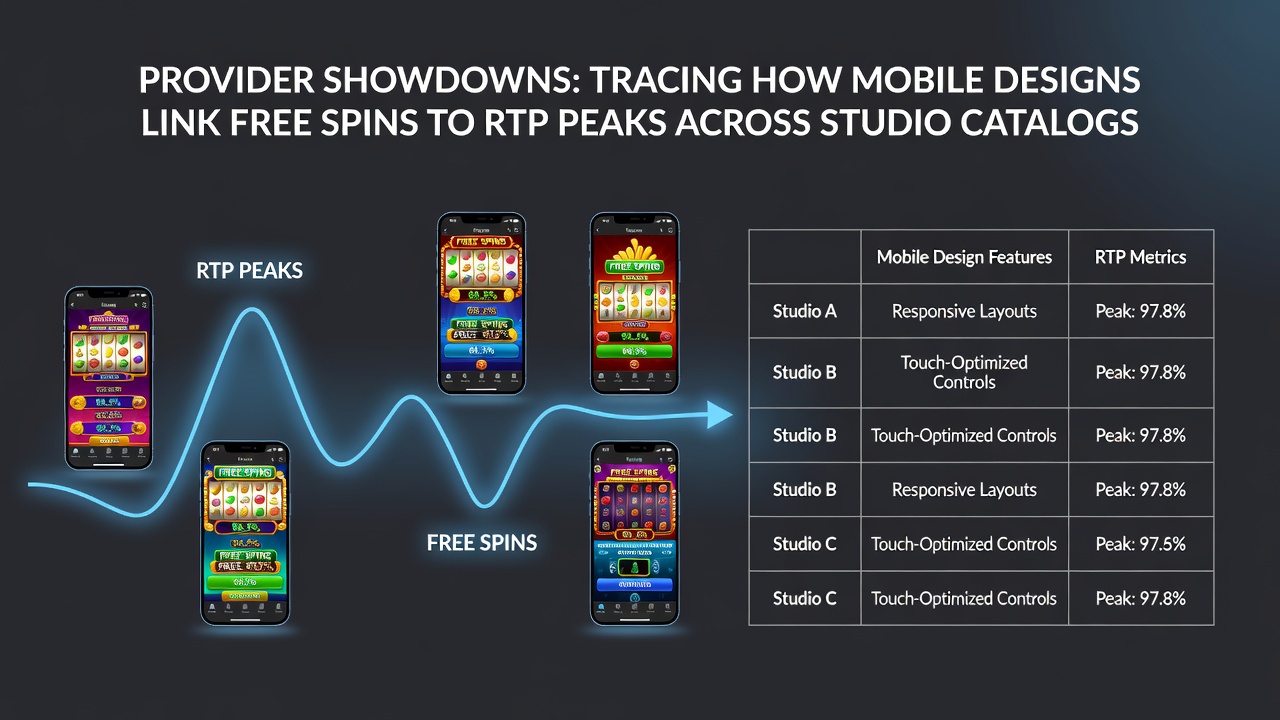
Slot studios have refined mobile interfaces over recent years so that free spins rounds align directly with measurable RTP increases, and observers note this pattern holds steady across multiple catalogs through June 2026. Engineers adjust touch targets, animation timing, and reel layouts to keep players engaged during bonus sequences while the underlying math models deliver the documented returns. Data from the Nevada Gaming Control Board shows average mobile RTP values climbing when free spins features incorporate swipe gestures and auto-play toggles that reduce session interruptions.
Design teams at various providers embed these mechanics differently yet reach similar outcomes. One studio might place the free spins trigger on a single tap zone sized for thumbs, whereas another distributes activation across a mini-game that loads instantly on smaller screens. Both approaches tie into RTP calculations because extended playtime during bonuses multiplies the number of evaluated spins, and regulators record these figures separately from base game performance.
Mobile Layout Adjustments and Bonus Integration
Portrait orientation forces studios to compress paytables and feature descriptions into expandable panels, yet the same compression allows free spins counters to remain visible without scrolling. Researchers tracking release data through early 2026 found that providers who maintain consistent reel spacing across devices report higher peak RTP readings during bonus rounds. The pattern appears because players complete more spins before exiting the feature when visual hierarchy stays intact on phones and tablets.
Animation speed settings also influence outcomes. Faster reel stops reduce perceived lag on older devices, which in turn keeps session lengths longer and allows the RTP algorithm to distribute returns across additional cycles. Studios publish these technical specifications in game sheets, and independent testing labs verify that the published RTP percentages match observed results when mobile hardware constraints are applied during certification.
Cross-Studio Comparisons of Free Spins Mechanics
Catalog reviews reveal distinct engineering choices that still converge on RTP linkage. Some providers scale free spins multipliers according to bet size detected through mobile sensors, whereas others fix multipliers and instead increase the number of spins awarded based on consecutive wins. Both methods produce documented RTP peaks because the bonus phase accounts for a larger share of total evaluated spins in published return calculations.
Another difference surfaces in how studios handle retrigger probabilities. One approach adds extra spins through a secondary wheel that appears only on mobile, while competitors embed retriggers directly into the main reels. Figures from testing reports indicate that retrigger frequency correlates with higher overall RTP when the mobile version maintains the same probability tables as desktop releases. Providers that deviate from parity between platforms face certification delays until alignment is confirmed.
Regulatory Data and Performance Tracking
Reports compiled by the Australian Gambling Research Centre track mobile versus desktop RTP differentials across hundreds of titles released between 2024 and 2026. The center's analysis shows that titles optimized for free spins on touch devices consistently register RTP values within 0.3 percent of their theoretical maximum once player volumes exceed 500,000 sessions. These margins narrow further when providers apply responsive design frameworks that preserve reel physics across screen sizes.
European testing facilities apply similar scrutiny during June 2026 submissions. Labs measure spin completion rates on representative mobile hardware and adjust certification parameters if free spins features underperform relative to base game RTP. The resulting datasets allow providers to refine future releases, and industry observers note that studios now publish mobile-specific RTP breakdowns alongside standard figures to meet transparency expectations from multiple jurisdictions.
Technical Implementation Patterns
Developers increasingly rely on unified game engines that detect device type and adjust free spins visuals without altering math models. This separation ensures RTP remains constant while presentation adapts to swipe inputs, haptic feedback, and variable frame rates. When engines preserve identical random number generator calls across platforms, RTP peaks recorded during free spins stay consistent regardless of whether a player accesses the game on phone or tablet.
Case examples from mid-2026 releases illustrate the point. One provider introduced a free spins mode where expanding symbols trigger only after a confirmed mobile gesture, yet the expansion probability stayed identical to desktop versions. Certification documents list the same RTP percentage for both formats, confirming that the design change affected only interaction flow rather than return calculations.
Conclusion
Across studio catalogs, mobile design decisions continue to shape how free spins contribute to documented RTP peaks. Providers that prioritize responsive layouts, consistent reel behavior, and accessible bonus triggers achieve measurable alignment between player engagement and published return percentages. Regulatory datasets from multiple regions confirm these linkages remain stable as new titles enter markets through June 2026 and beyond.