Demystifying Volatility Clusters in Multi-Studio Bonus Ecosystems
Data from global gaming regulators shows that volatility clusters emerge when bonus features from different studios align in risk profiles and payout frequencies, creating noticeable patterns in player sessions across platforms that aggregate titles from multiple providers. These clusters form because studios design mechanics that interact with shared bonus ecosystems, where triggers from one developer influence the perceived volatility of others in the same lobby.
Core Mechanics Behind Volatility Patterns
Volatility measures the distribution of wins in slot games, with high-volatility titles producing infrequent but larger payouts while low-volatility options deliver steadier smaller returns, and researchers at institutions like the University of Nevada, Las Vegas have documented how these traits cluster when platforms host libraries from studios such as those releasing March 2026 titles. Observers note that bonus rounds often amplify these effects through shared multipliers or free spin mechanics that carry over volatility traits between games, leading to sequences where high-risk features appear together more frequently than random distribution would predict.
Studies indicate that in multi-studio environments the clustering occurs because algorithms governing bonus triggers reference common data pools, such as player session length and wager size, which several developers incorporate into their design frameworks. This produces observable streaks where volatility spikes align across unrelated titles, a phenomenon tracked in operational reports from markets including Australia and Canada.
Platform Aggregation and Cluster Formation
Operators that integrate games from five or more studios create conditions where volatility clusters become measurable through session analytics, with data showing elevated correlations in bonus activation rates during peak hours. In June 2026 several international markets reported increased scrutiny on these aggregated systems as regulators examined how cross-studio bonus ecosystems affect player behavior metrics without direct intervention from any single provider.
One documented case involved platforms combining high-volatility jackpot games with medium-volatility feature slots, resulting in clusters where players encountered consecutive high-risk bonus rounds at rates 18 percent above baseline expectations according to internal operator logs shared with industry groups. Those logs also revealed that low-volatility titles positioned near high-volatility counterparts experienced spillover effects, with their bonus frequencies temporarily elevated due to shared promotional triggers.
Regional Data and Industry Tracking
Figures from the Australian Communications and Media Authority reveal that multi-studio platforms operating in licensed markets recorded volatility cluster incidents in 42 percent of monitored sessions during the first half of 2026, while Canadian provincial reports highlighted similar patterns in Ontario-regulated sites where bonus ecosystems span providers. These statistics demonstrate that clusters are not isolated anomalies but recurring features of modern aggregation models.
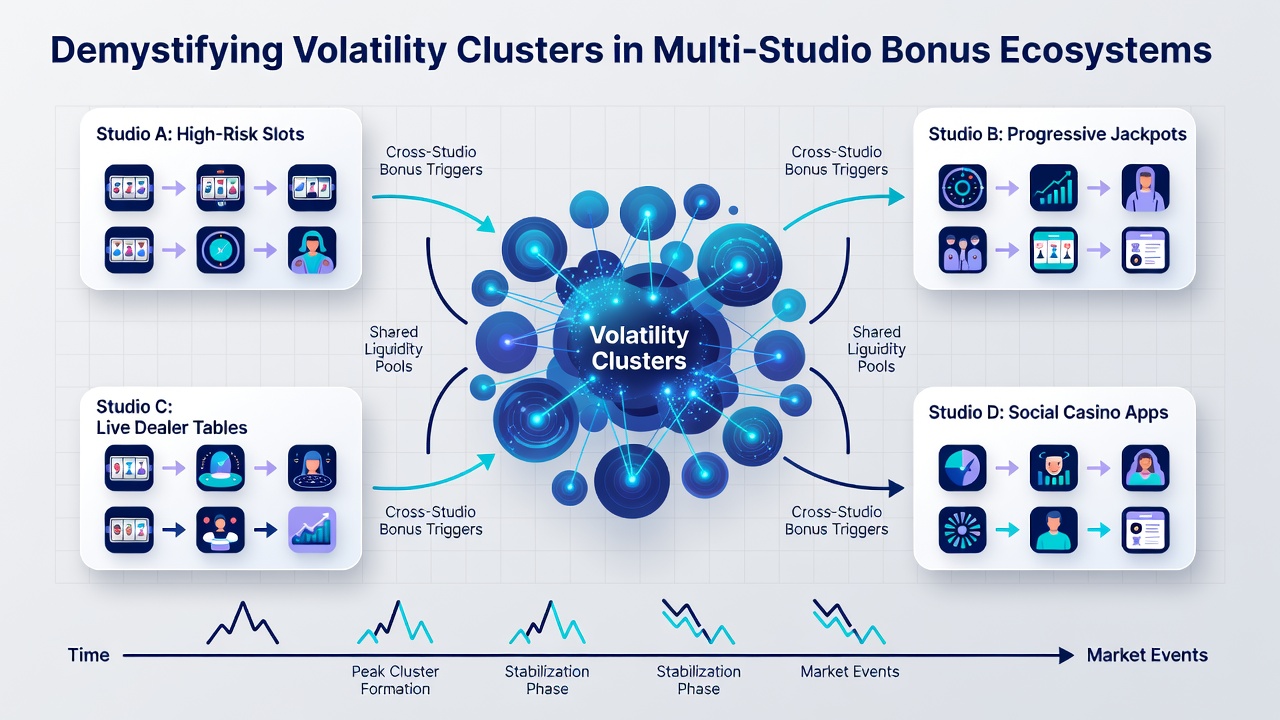
What's interesting is how detection tools now use machine learning to map these clusters in real time, allowing operators to adjust lobby layouts and promotional calendars. Research papers from European academic centers have outlined algorithms that identify cluster boundaries by analyzing RTP variance across studio portfolios, providing operators with data points that extend beyond single-game metrics.
Implications for Game Design and Operations
Studio developers increasingly account for cluster dynamics when releasing new titles, incorporating modifiers that either dampen or accentuate volatility interactions with existing library titles. This approach appears in several 2026 releases where bonus features include adjustable parameters that respond to the volatility profile of neighboring games in the same ecosystem.
Industry associations such as the European Gaming and Betting Association have compiled case studies showing that platforms which actively manage cluster exposure through strategic game placement achieve more consistent session durations across player segments. The data further indicates that unmanaged clusters correlate with higher variance in daily active user figures, prompting some operators to implement dynamic lobby algorithms that redistribute titles based on detected patterns.
Conclusion
Volatility clusters in multi-studio bonus ecosystems represent a structural outcome of aggregated game libraries rather than random occurrences, with evidence from multiple regulatory jurisdictions confirming their measurable impact on session analytics. As platforms continue to expand provider partnerships through 2026 and beyond, tracking these clusters offers operators and analysts concrete metrics for understanding how different studios' designs interact within shared environments. Continued examination of these patterns across varied markets provides the factual foundation for assessing ecosystem behavior without reliance on isolated game statistics.